Masks
How to apply a red clay mask: the right time and frequency
Quick answer
Apply a red clay mask in a thin layer to clean, dry skin, avoiding the eye area, leave it until it dries (usually 10–15 minutes) and rinse with lukewarm water. Two to three times a week is enough for oily and combination skin; for dry skin, once a week or only on the T-zone is a better choice.
What does red clay do?
Clay masks are mineral powders that draw excess oil and impurities from the skin's surface. Red clay gets its colour from the iron oxides it contains and has a slightly denser texture than white clay (kaolin). That is why it is often chosen for skin that gets shiny during the day and has visible pores.
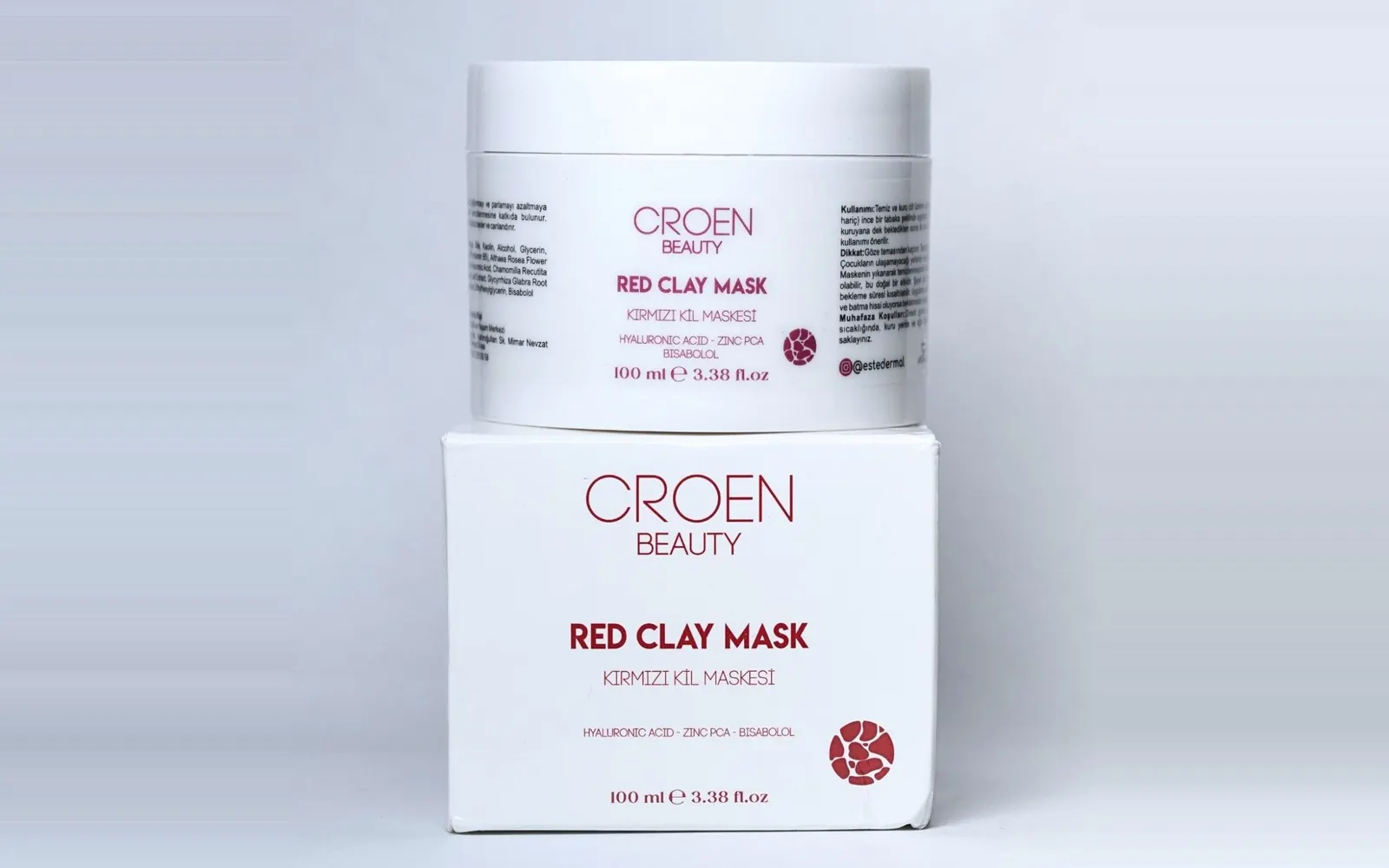
Alongside red clay, Croen Red Clay Mask contains kaolin, zinc PCA to support oil balance, hyaluronic acid for moisture and soothing bisabolol. While the clay purifies, these ingredients help keep the mask from over-drying the skin.
Step-by-step application
- Cleanse and dry your skin. Make-up and sunscreen residue reduce the clay's contact with the skin. Wash with a gentle cleanser and pat dry with a towel; the mask goes on dry skin.
- Apply a thin layer. Using your fingertips or a mask brush, spread an even layer, leaving the eye area and lips free. A thick layer does not work better; it only makes rinsing harder.
- Wait until it dries. As the mask dries, its colour lightens and you feel a slight tightness; this usually takes 10–15 minutes. If you feel burning or stinging, rinse it off straight away.
- Rinse with lukewarm water. Soften the mask with water in your palms and remove it without rubbing.
- Moisturise. Skin needs moisture after a clay mask. Finish with a toner and a light moisturiser.
How often should you use it?
Two to three times a week is enough for oily and combination skin. Using a clay mask every day can upset the skin's natural oil balance and lead to signs of dryness such as tightness and flaking.
For dry or sensitive skin, once a week and only on oily areas such as the forehead, nose and chin is the better approach. Applying different masks to different areas of the face is called "multi-masking" and is a practical method for combination skin.
Common mistakes
- Waiting despite discomfort: If you feel stinging or burning, do not wait for the time to run out; rinse the mask off immediately and shorten the time next time.
- Scrubbing it off: Clay already purifies; rubbing only causes unnecessary irritation.
- Using a strong peel the same evening: Use AHA/BHA products on different days from your clay mask.
- Skipping moisturiser afterwards: Freshly purified skin responds better to moisturiser.
Frequently asked questions
Can a red clay mask be used on dry skin?
Yes, but it is best to limit it to once a week and apply it only to oily areas. Always use a moisturiser afterwards.
Is redness after a clay mask normal?
Mild, short-lived redness can appear after rinsing; this is a common, natural effect of clay masks. If redness, burning or itching persists, stop using the product and consult a dermatologist.
Does a clay mask shrink pores?
Clay reduces excess oil and dirt in the pores, which helps them look less visible. Pore size itself, however, depends largely on your skin structure.
This article is for general information only and does not replace medical advice. If you have a persistent skin condition, please consult a dermatologist.