Masks
What does a red clay mask do? Who should use it?

Quick answer
A red clay mask helps remove excess oil and impurities from the skin's surface, which is why it is used 2–3 times a week, especially on oily and combination skin. Apply a thin layer to clean, dry skin, avoiding the eye area, leave it until it dries and rinse off.
What is red clay?
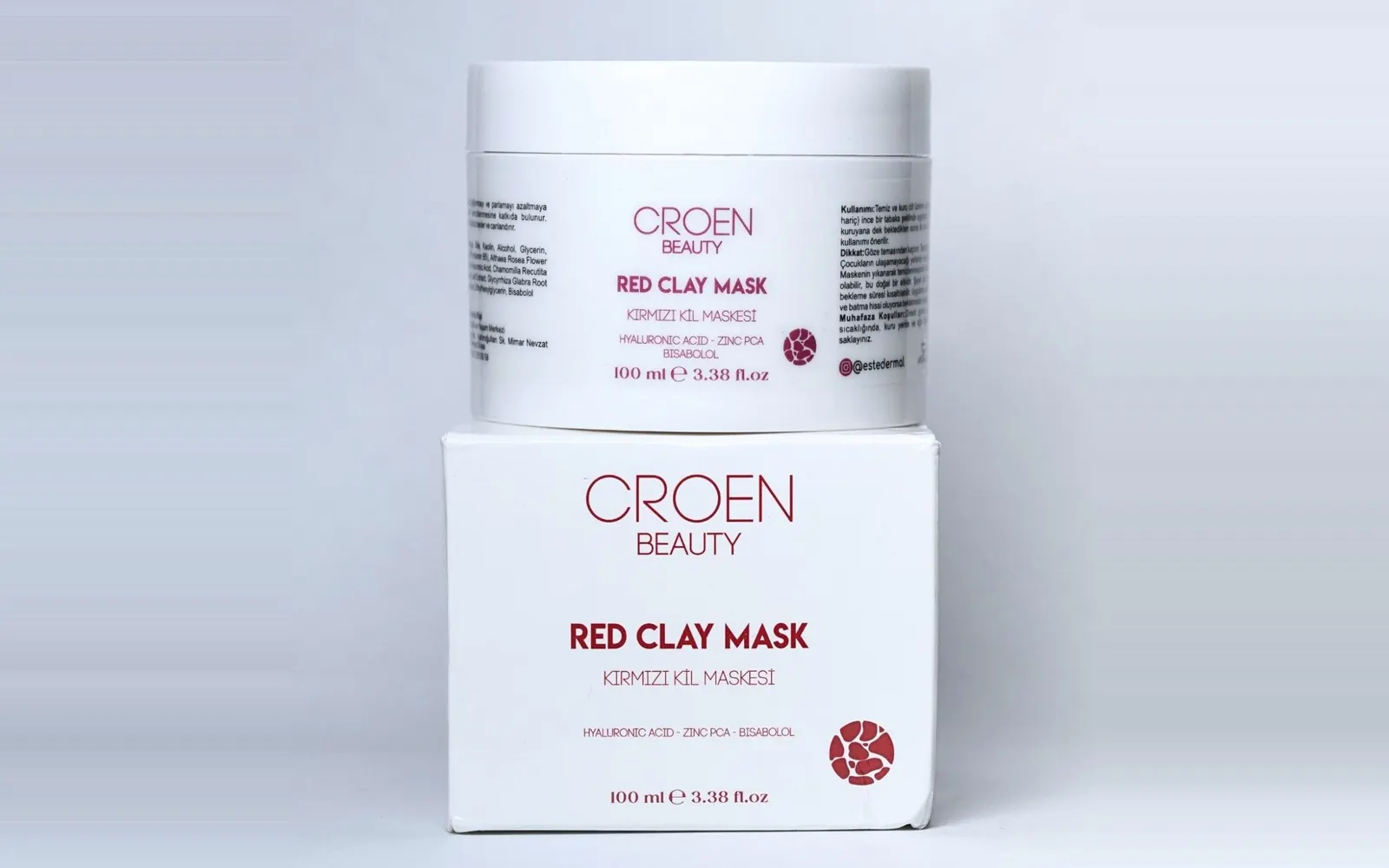
Red clay is a type of clay that gets its colour from the iron oxides it contains. In cosmetics, clay masks are popular because they help draw excess oil and dirt from the skin's surface. Alongside red clay (illite) and kaolin, Croen Red Clay Mask contains zinc PCA, hyaluronic acid and bisabolol.
Who should use it?
- Oily and combination skin: 2–3 times a week for skin that gets shiny during the day and has visible pores.
- Normal skin: once a week to refresh the skin.
- Dry skin: only on oily areas such as the forehead, nose and chin, and only occasionally.
How to use it
- Cleanse and dry your skin.
- Apply a thin layer of the mask, avoiding the eye area.
- Wait until it dries; if it stings or burns, rinse it off straight away.
- Rinse with lukewarm water and moisturise.
Mild, short-lived redness may appear after rinsing; this is a common effect of clay masks.
Where to buy
To order Croen Red Clay Mask for personal use, contact us on WhatsApp or via our contact page. To use or sell it in your salon, request a price for your business through our quote form.
Frequently asked questions
Can a red clay mask be used every day?
No. Two to three times a week is enough for oily and combination skin.
Is a clay mask good for pores?
It reduces excess oil and dirt in the pores, helping them look less visible.
How many ml is the red clay mask?
Croen Red Clay Mask comes in a 100 ml jar.
This article is for general information only and does not replace medical advice. If you have a persistent skin condition, please consult a dermatologist.